Every week someone asks in a FIFO group whether they will "pass the medical". Usually they are worried about the wrong thing. After twenty years in HR across Australian mining and construction, here is what the pre-employment process actually involves, where people fall over, and what to sort before you spend money on tickets. This is general information from the hiring side, not medical advice; your GP is the person for anything about your own health.
What the medical is for
A site medical is a fitness-for-work assessment. The employer needs to know you can safely do the physical job, in heat, on twelve-hour shifts, often remote from a hospital. Expect a questionnaire about your history, a physical exam, hearing and vision, blood pressure, usually a lung function test, and for many roles a functional assessment: lifting, bending, carrying, sometimes a step test. For some roles there is a musculoskeletal screen. It is thorough and it is normal. Most healthy adults pass it without drama.
Where people actually get caught
Not where they expect. Hearing, from years of noisy work without protection. Blood pressure, from nerves and from never having had it checked. Weight and fitness for roles with a functional component. A back or knee injury that was never declared and then shows up in the functional. And in my experience the biggest one: not disclosing something and having it come out. A condition you manage is usually workable. A condition you hid is a trust problem, and trust is what site roles run on.
The practical advice: see your GP before you apply, not after. Get your blood pressure and hearing checked. If something in your history worries you, ask the GP how it is likely to be viewed and whether there is documentation that helps. Walk in knowing, not hoping.
The drug and alcohol screen
This is the part that is exactly as serious as people fear. Pre-employment screening is standard, random testing on site is standard, and for-cause testing after an incident is standard. A non-negative result at pre-employment ends the application, and in some companies it ends it for a long time. A positive on site is usually the end of the job.
What people get wrong: thinking it is only about the week before. Different substances show up for different periods, and some for a lot longer than a week. If you are not certain you would pass a screen tomorrow, do not apply this week. Sort it, wait, then apply. That is not me moralising. It is the single most common way a good application is wasted, and the ticket money with it.
The other one: prescription medication. Some prescribed medications will show up and some affect fitness for work on their own. Declare them, bring the script or a GP letter, and let the medical provider make the call. Undeclared is the problem, not prescribed.
The things around the medical
A current National Police Clearance, usually at your cost, and often a requirement before the medical is even booked. Working rights documentation. Sometimes a driving history. When a recruiter rings and says "can you get your medical done Thursday", the applicant who already has the police clearance in hand is the one who flies Sunday. Get it before you apply.
The honest summary
If you are reasonably fit, have had your hearing and blood pressure checked, have declared what needs declaring and would pass a drug screen today, the medical is a formality. If one of those is not true, fix that one thing before you spend a dollar on tickets or an hour on applications, because nothing else matters until it is fixed. The free readiness check asks you exactly this, and the guide goes through the whole pre-employment sequence in order.
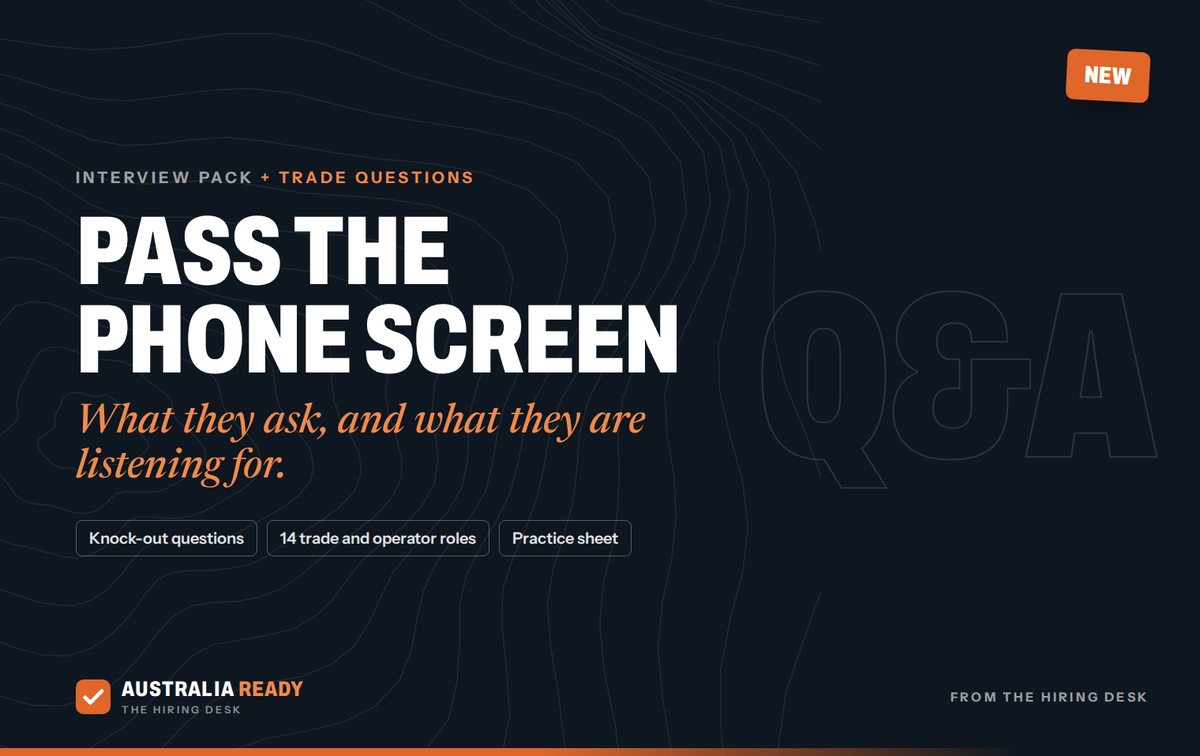 The FIFO Interview Pack · A$29Got the call? The phone screen, the knock-out questions, and the trade competency questions recruiters read off a list for 14 roles, with what they are listening for.Get it →
The full playbook, from the hiring side
How to Get Into FIFO (and get asked back): the recruiter's screen, the ticket budget planner, your way in by starting point, the CV and interview, and the unwritten rules of your first swing, plus the Employer Map: 50 places to apply. A$49, opens in any browser, yours forever.
Get the guide · A$49Secure checkout · card or PayPal · instant downloadNot sure yet? Read chapter 2 free, no email needed.
Not ready to buy? Take the free two-minute readiness check first, or grab the free FIFO starter checklist and FIFO CV template.
Not ready to buy?
Get the free FIFO starter checklist and CV template
One page: what to fix before you apply, which tickets to buy first, where to actually apply, and the first-swing rules. Yours straight away.
No spam. Unsubscribe anytime. Privacy Policy.