By the time you get to an interview, your CV has done its job. The interview is checking something different: whether you will be safe, whether you will turn up, whether you understand what you are signing up for, and whether a crew can live with you for two weeks in a camp. Here are the questions I ask most, and what I am actually listening for.
“Why FIFO?”
Not a trick question, but it sinks a lot of people. “The money” on its own tells me you will leave the moment something pays more or the roster gets hard. What I want is a plan: “I want a house deposit in three years. I have talked to my partner about a two-and-one and we have worked out how it runs at home.” Goal, home sorted, eyes open.
“Tell me about a time you saw something unsafe. What did you do?”
This is the one that matters most. Every site lives and dies on people speaking up. A weak answer is “I have never seen anything unsafe”, which nobody believes, or a story where you fixed it yourself without telling anyone. A strong answer is short: what you saw, that you stopped or made it safe, that you reported it to your supervisor, and what happened next. If you have never worked on a site, use a warehouse, a farm, a kitchen or a ladder at home. The shape matters more than the setting.
“What would you do if you were asked to do a task you weren’t trained or ticketed for?”
There is one right answer. You stop, you tell your supervisor you are not trained or ticketed for it, and you do not do it until you are. People talk themselves out of jobs here by trying to sound keen. “I would give it a go” is the wrong answer every time.
“What do you know about the roster? How will things go at home?”
I am checking you have actually thought about two weeks away, twelve-hour shifts and the flight days. Say which roster you are going for, that the people at home know, and how you will keep in touch. If you live alone, say so. That is a good answer too.
“Tell me about a time you disagreed with a supervisor or a workmate.”
I am listening for whether you go straight to the person, stay calm and let it go once it is sorted. Bagging out a previous boss here is the fastest way to end an interview. Keep it short, keep it fair, and finish on how it was resolved.
“Have you worked long shifts, outdoors, in the heat?”
Give a real example if you have one. If you have not, say so honestly and say what you have done that comes close: farm work, a summer of labouring, a hospitality season of double shifts. Pretending is worse than not having done it.
“Tell me about a mistake you made at work.”
Everyone makes them. I want to hear that you owned it, told someone, fixed what you could and changed something so it did not happen again. “I can’t think of one” is a red flag.
“Would you be able to pass a drug and alcohol test?”
The answer is yes, said plainly. Do not joke about it. If you take prescription medication, say you have the paperwork from your doctor and you will declare it the way the site requires. More on that in does FIFO drug test for weed.
“Do you have any questions for us?”
Have two ready. Ask about the induction, the crew you would be working with, or what a good first swing looks like to them. Do not ask about pay first. You will get to it.
How to answer any of them
Keep each answer to a minute or so. Say what the situation was, what you did, and how it ended. Use real examples, even small ones. Turn up early, in clean, plain clothes. On a video call, sit somewhere quiet with your face lit. And if you do not know something, say so. On a mine site, “I don’t know, I’ll ask” is exactly what they want to hear.
The full interview chapter, with the phone screen and the one safety answer that matters, is in the guide. Before you get to an interview, make sure your CV gets you one: what a recruiter sees in thirty seconds.
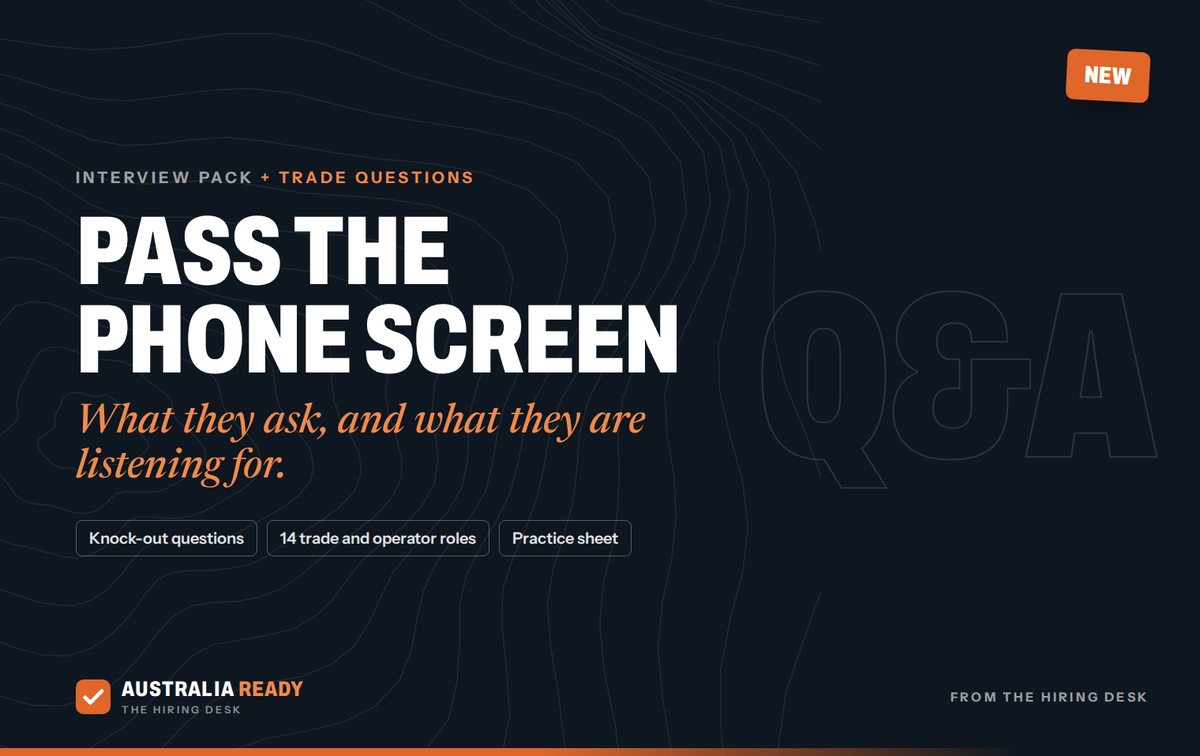 The FIFO Interview Pack · A$29Got the call? The phone screen, the knock-out questions, and the trade competency questions recruiters read off a list for 14 roles, with what they are listening for.Get it →
The full playbook, from the hiring side
How to Get Into FIFO (and get asked back): the recruiter's screen, the ticket budget planner, your way in by starting point, the CV and interview, and the unwritten rules of your first swing, plus the Employer Map: 50 places to apply. A$49, opens in any browser, yours forever.
Get the guide · A$49Secure checkout · card or PayPal · instant downloadNot sure yet? Read chapter 2 free, no email needed.
Not ready to buy? Take the free two-minute readiness check first, or grab the free FIFO starter checklist and FIFO CV template.
Not ready to buy?
Get the free FIFO starter checklist and CV template
One page: what to fix before you apply, which tickets to buy first, where to actually apply, and the first-swing rules. Yours straight away.
No spam. Unsubscribe anytime. Privacy Policy.